21 days camping trip with roof tent. Experience Uganda, the “Pearl of Africa” in a very special way. Start your adventure in a rooftop camper, experience nature up close and enjoy the fantastic wildlife, country and people on your own. Uganda offers a large network of campsites of all categories, often as part of a lodge whose facilities such as restaurant, pool and sanitary facilities you can use.
The routes of our self-drive trips in a camper with roof tent are tried and tested suggestions. Of course you can organize the trip according to your wishes. Uganda’s campsites do not need to be pre-booked, you will always find an attractive spot. We will be happy to advise you on your choice of itinerary
21 days camping trip with roof tent: Highlights
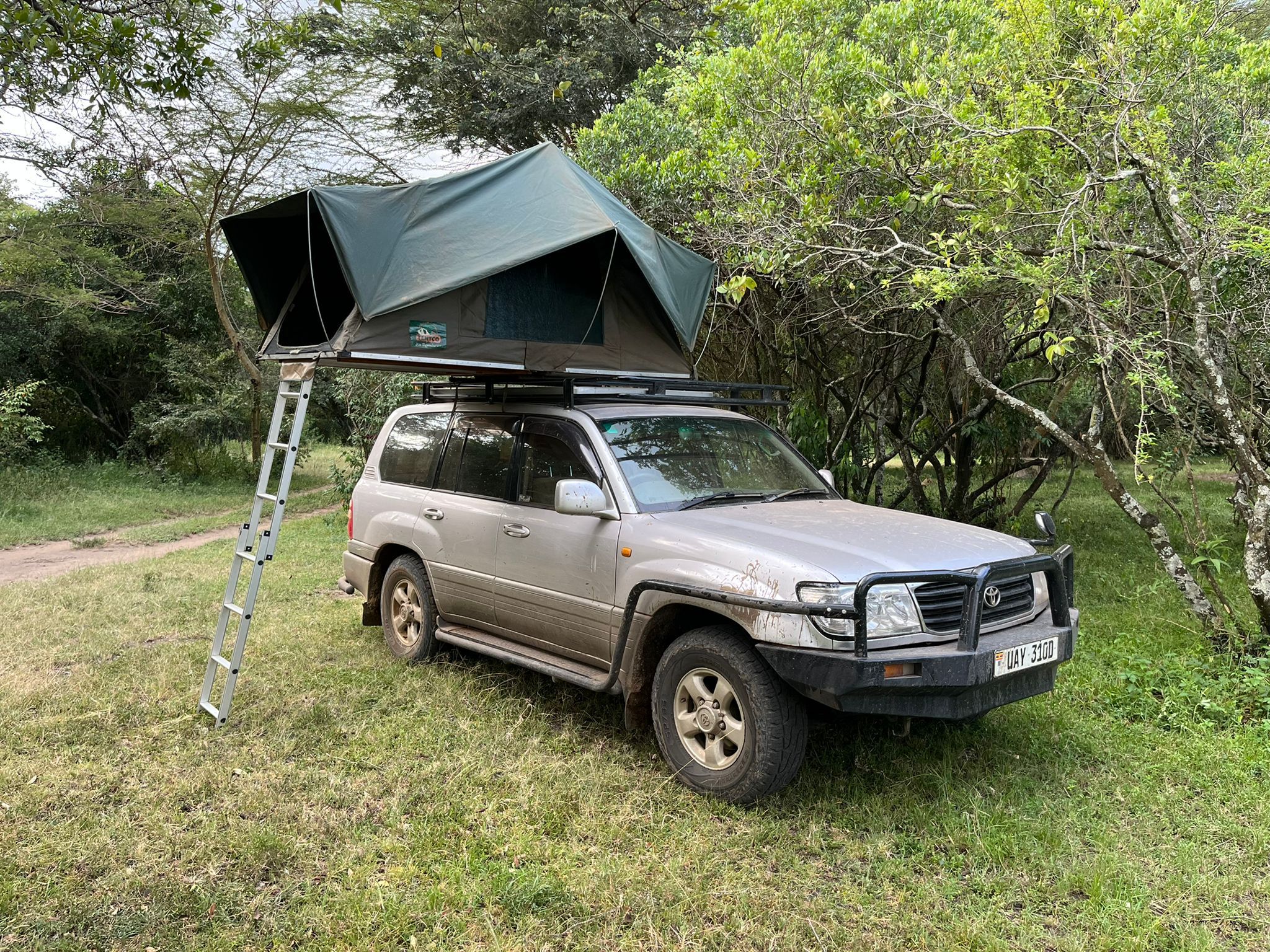
Toyota Hilux with Alucab Canopy and Roof Tent complete camping equipment
Individual route planning
Gorilla and Chimpanzee Tracking
Safari costs
2,100 USD / per Person (when booking with 2 persons)
Includes
Airport
Lodge/hotel overnight stay on the day of arrival and departure Toyota Hilux Diesel with Alucab Canopy and integrated roof tent Camping equipment
Cool box, sink, dishes, cutlery, pots, pan, Gas cooker
Blankets / Pillows / Bedding Camping table and chairs Outdoor shower
80 litre water tank
Excludes
Visas
Arrival and departure Uganda Campsite fees
Catering Diesel
National Park Entrance Fees
Permits for gorilla and chimpanzee tracking Diesel
Flights
 21 days camping trip with roof tent: Itinerary
Day 1: Arrival Day – Entebbe (EBB), Uganda
After landing in Entebbe, our driver will meet you at the airport and transfer you to your hotel. Depending on your arrival time, you can visit the Entebbe Botanical Gardens or take a boat trip in the Mabamba Swamp.
Day 2: Canoe Trip in the Mabamba Swamp
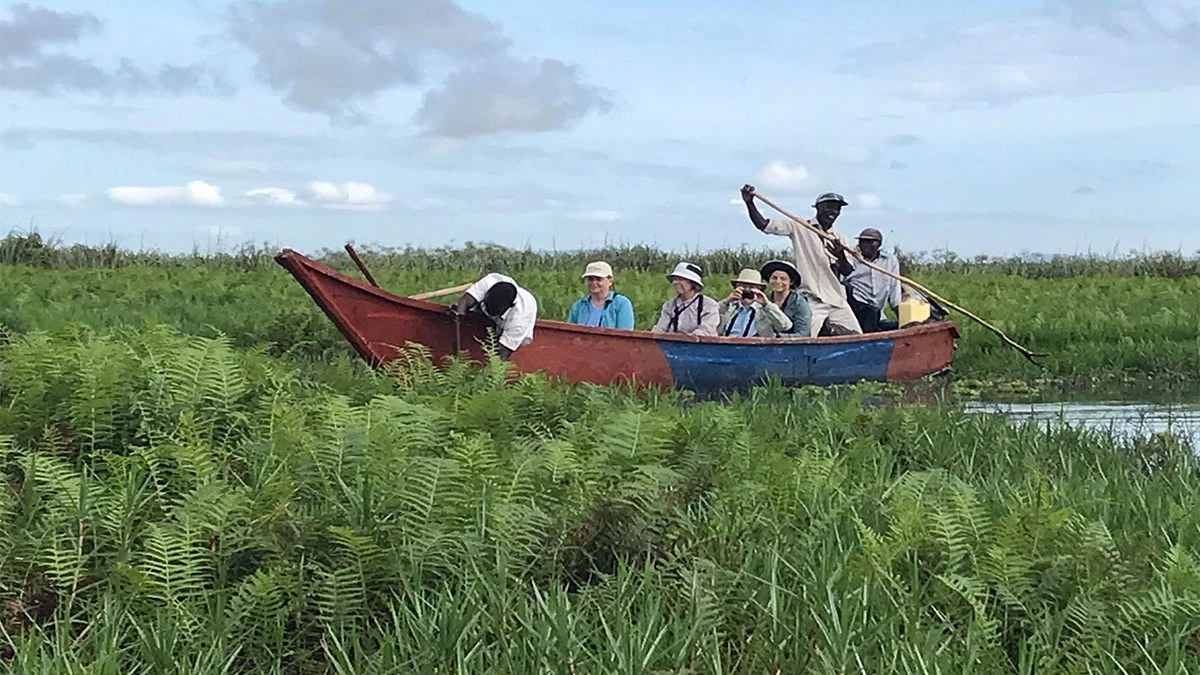
After an early breakfast, we’ll embark on a boat trip in the Mabamba Swamp. This wetland is located on the edge of Lake Victoria, and we’ll travel into the swamp by motorboat. Once there, you’ll transfer from the speedboat to a canoe. Among many other bird species, the Mabamba Swamp is home to several specimens of the prehistoric shoebill stork. The shoebill is found mainly in four countries: Uganda, Rwanda, South Sudan, and Zambia, but it is best seen in the Mabamba Swamp. Around midday, we’ll return to Entebbe.
…
Day 3: Vehicle Pickup and Drive to Moroto
After breakfast, you will pick up your vehicle. Following a thorough briefing, you will depart on a well-maintained road, passing Kampala and heading north to Moroto in Uganda.
Day 4: Drive from Moroto to Kidepo National Park
Today we continue our journey to Kidepo National Park, Uganda’s northernmost park. En route, we will stop in Kotido. A visit to Kotido is a wonderful stop on your way from Moroto to Kidepo, where you will experience the vibrant culture of Nakapelimoru – the largest traditional village in East Africa. You will arrive at your lodge near Kidepo National Park in the evening.
Day 5: Kidepo National Park, Game Drive
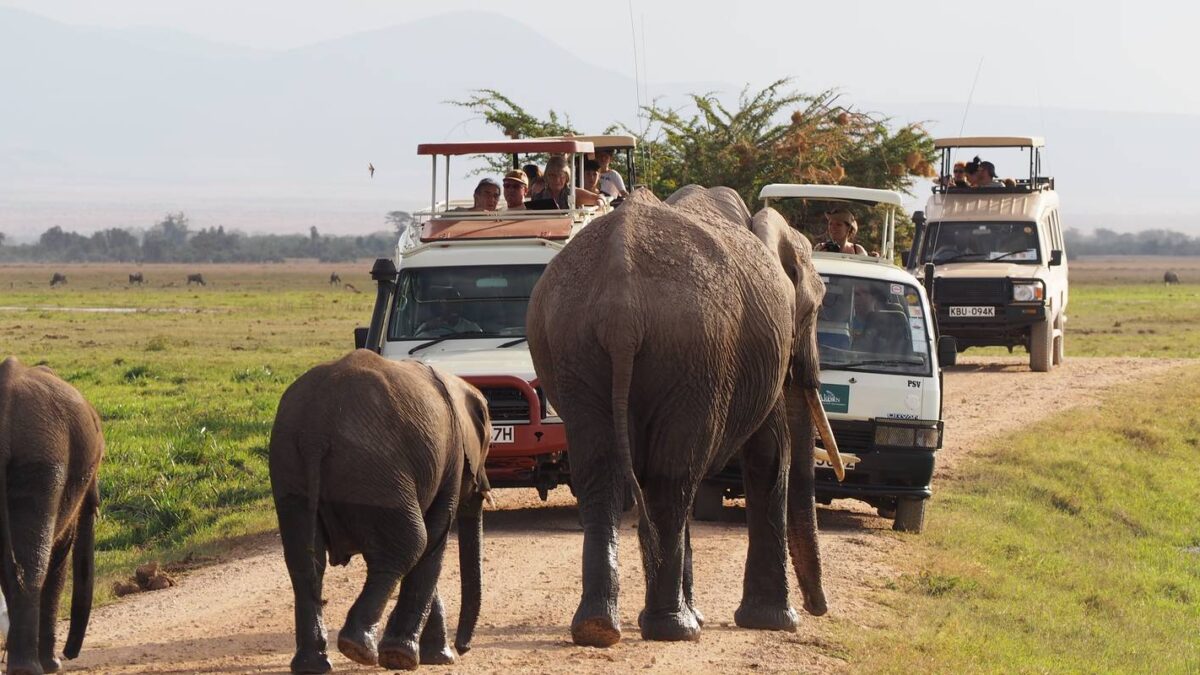
This morning you will head into the park for your first game drive. Due to its remote location, Kidepo National Park remains relatively untouched by tourism. The park is characterized by its exceptional biodiversity. It is home to 28 animal species not found in any other park in Uganda. Most game drives take place along the Narus Valley, where the park’s wildlife gathers almost year-round, offering you the chance to experience the animals up close.
Day 6: Kidepo National Park, 2nd Game Drive
Today you can choose between another game drive and a walking safari. Accompanied by an armed ranger, you’ll explore the savanna. The hike follows dry riverbeds, rocky ascents, and traverses bushland to reach the animals. Most of the walk takes place in the Lamoj Mountains, just a few kilometers from the park headquarters. This area is located in the Narus Valley, a prime wildlife viewing area.
Day 7: Kidepo National Park – Murchison Falls National Park
After breakfast, you continue your journey. Today’s destination is Murchison Falls National Park. En route, you’ll have the opportunity to visit the Karamoja nomads. In one of their villages, you’ll gain insight into the way of life of this centuries-old tribe. After arriving at Murchison Falls National Park, you’ll embark on your first game drive on the way to the Nile ferry. Upon arrival at your lodge, you can enjoy the view of the Nile from the terrace and listen to the hippos.
Day 8: Murchison Falls National Park, Game Drive, and Boat Safari
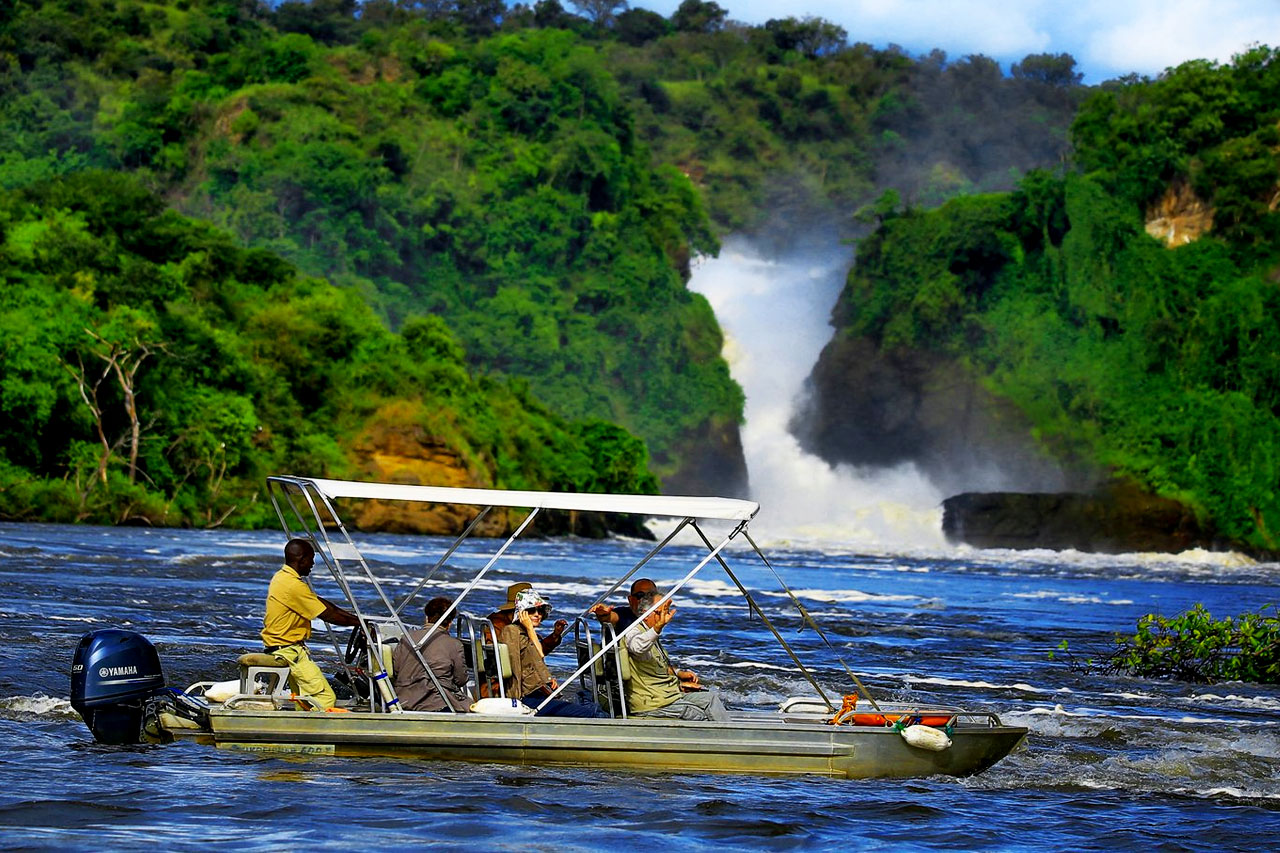
This morning, you’ll set off on your first game drive in the park. Murchison Falls National Park boasts a great diversity of wildlife. Lions, leopards, elephants, giraffes, hartebeest, oribi, and of course, the Uganda kob are among the most famous. Your guide will take you to the most beautiful spots and will be happy to answer any questions you may have. The vegetation, with its savannah and floodplain forest, will captivate you. After lunch, you’ll embark on a boat safari towards Murchison Falls. Crocodiles, hippos, and water birds will accompany you on your journey along the Nile to the impressive waterfalls. Just before the thundering spray of the falls, the boat will anchor against a rock, allowing you to enjoy the view of the river and take your photos. If you wish, you can hike a steep trail to the top of the falls, where your guide will pick you up. Alternatively, you can return by boat.
Day 9: Murchison Falls National Park – Fort Portal – Kibale Forest
In the morning, you will leave the park and travel towards Fort Portal. The route follows the shores of Lake Albert, one of the country’s great lakes. At a scenic viewpoint, you will have the opportunity to take photos of Lake Albert. You will arrive in Fort Portal in the early afternoon. After a break at a charming café, you can explore the local market. In the late afternoon, you will arrive at your lodge in Kibale Forest.
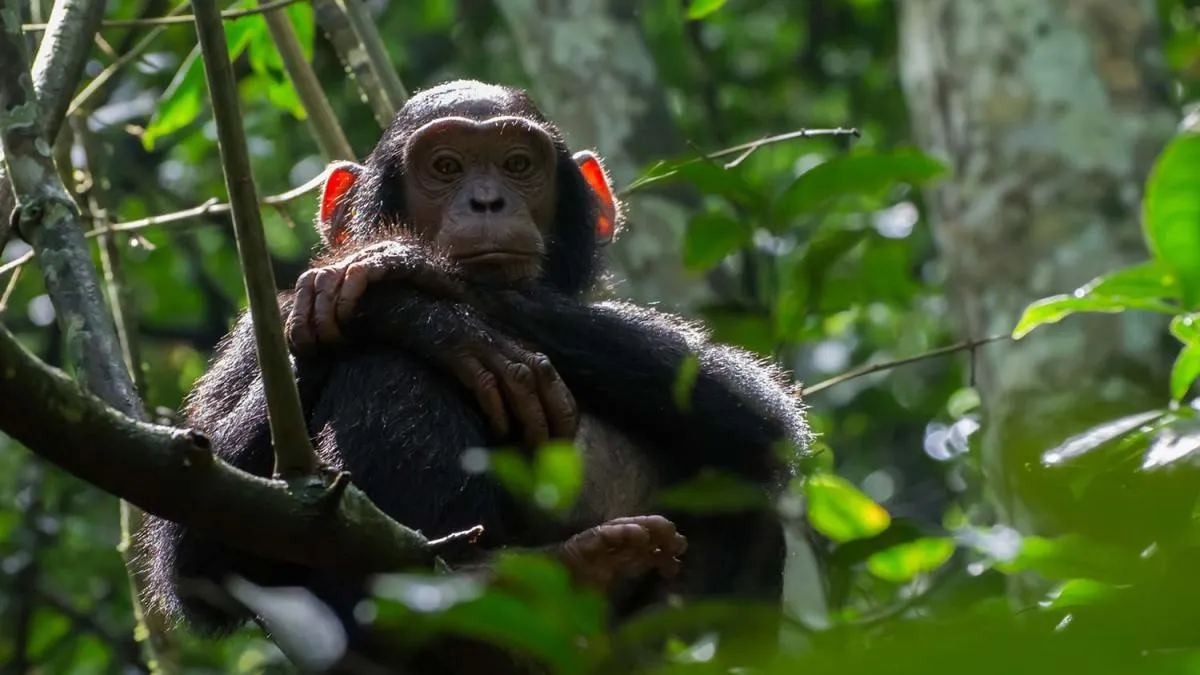
Day 10: Kibale Forest National Park, Chimpanzee Tracking, and Bigodi Swamp Hike
Today, accompanied by an experienced guide, you’ll follow the chimpanzee tracks into the Kibale Forest jungle. With a bit of luck, you’ll soon spot your first primates! You’ll observe the chimpanzees and follow them through the rainforest. In the afternoon, you’ll embark on a hike through the Bigodi Swamp. Besides countless tropical birds, this marshland is also home to various monkey species, such as the colobus monkey. The hike ends in a small village on the edge of the swamp, where you’ll visit a school and have the opportunity to meet a local family.
Day 11: Kibale Forest National Park – Queen Elizabeth National Park
After breakfast, you’ll travel towards Queen Elizabeth National Park. The hilly crater landscape with its more than 50 lakes and green pastures is reminiscent of the Swiss Alps. The slopes of the Rwenzori Mountains on the right side of the road complete the magnificent picture. Kasese, the last town before Queen Elizabeth National Park, offers an opportunity for some shopping before your first game drive begins. After an exciting game drive, you will arrive at your lodge in the evening.
Day 12: Queen Elizabeth National Park, Game Drive and Boat Safari
Today you will depart early for a morning game drive in Queen Elizabeth National Park. This expansive park lies at the foot of the Rwenzori Mountains, also known as the Mountains of the Moon. Lake Edward and Lake George are located within the park. In the national park, you will embark on an adventurous game drive, encountering all that African wildlife has to offer. You will find lions, buffalo, hyenas, and also the Kobe antelope, which is native to Uganda. The Kazinga Channel connects the two lakes. Crocodiles and hippos live here, along with a large number of bird species, some of which are found only in this region. In the afternoon, you will take a boat safari on the channel, giving you the opportunity to see these animals up close.
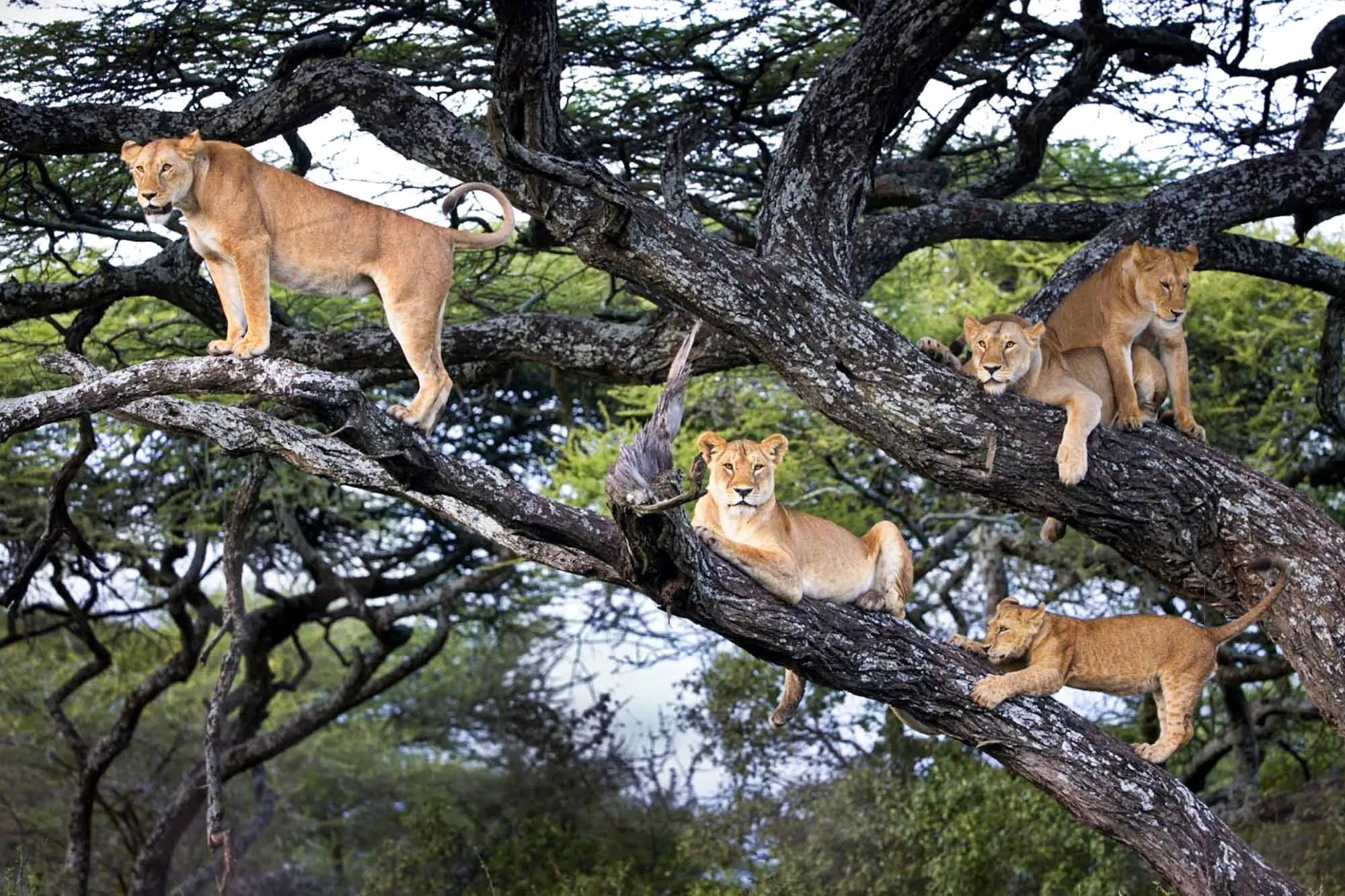
Day 13: Queen Elizabeth NP – Game Drive and Tree-Tree Lions in Ishasha
After breakfast, you will go on another game drive in Queen Elizabeth National Park. The park is home to approximately 3,000 elephants. Afterwards, we continue south to the Ishasha region. This area is known for its tree-climbing lions. Ishasha also provides habitat for leopards, hyenas, and hippos.
Day 14: Ishasha – Bwindi Impenetrable National Park
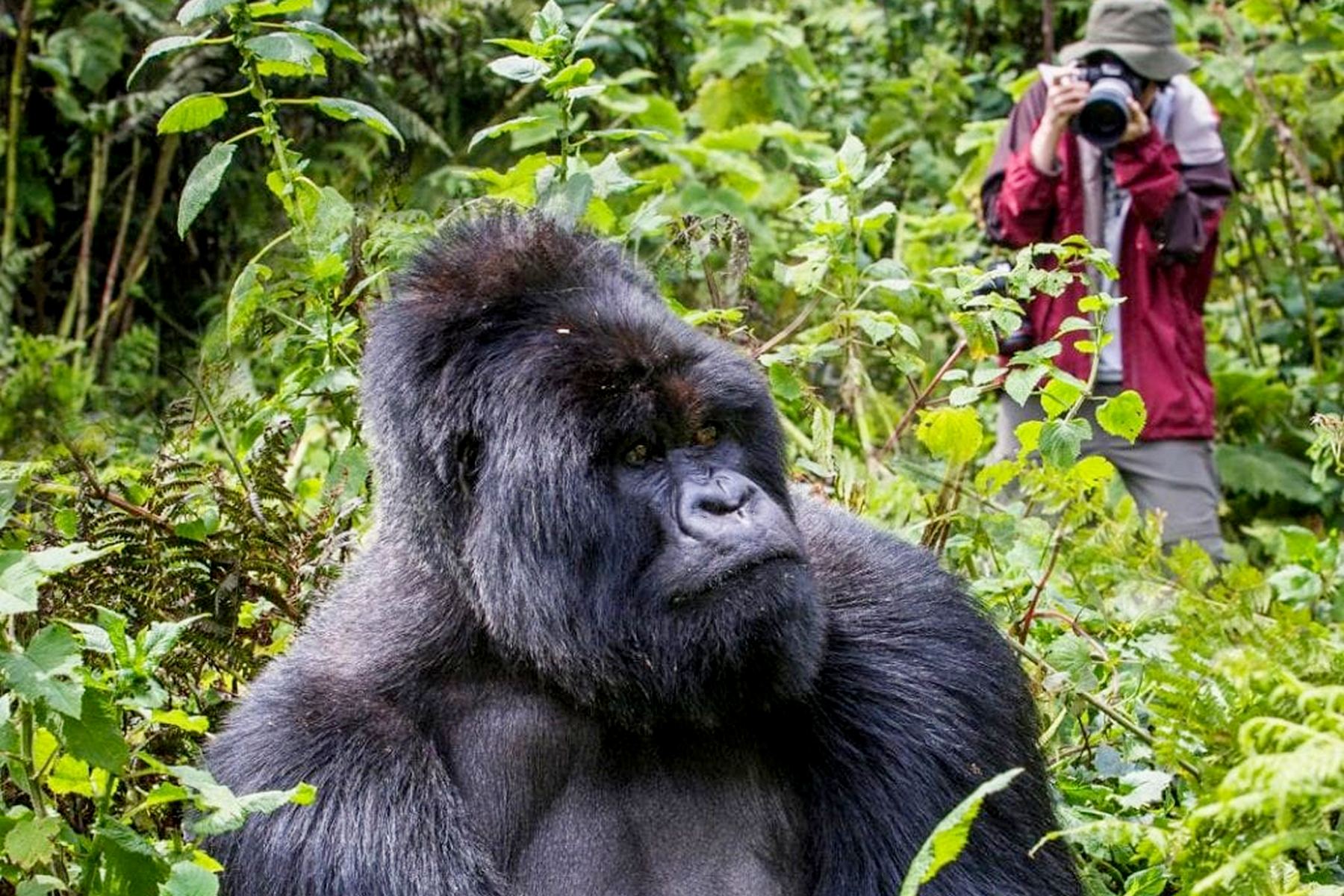
Today’s journey takes us to Bwindi Impenetrable National Park. Here live the critically endangered mountain gorillas. The population has increased from approximately 800 to 1,100 in the last nine years. This is largely thanks to tourism, whose payments contribute to the protection of these unique animals. The gorilla families are carefully protected, and you will soon learn their names, such as Otaka, Elsa, and Nyakina.
Day 15: Bwindi Impenetrable National Park, Gorilla Tracking
Today you have the opportunity to go gorilla tracking. Here in Bwindi Imperative National Park, gorillas and chimpanzees share a common habitat. Nowhere else will you find these two primate species so close together. After a briefing by the rangers at the park entrance, you’ll begin your hike in the rainforest. You’ll start with your guide and a ranger on a well-maintained trail, gently uphill into the park. Along the way, the guide will answer your questions about the impressive rainforest vegetation and the primates’ way of life. Depending on the location of “your” gorilla family, you’ll then venture off the beaten path, venturing off-trail and through the bush. The ranger will lead the way; you’ll follow, and suddenly you’ll be standing before the gorilla family. You’ll have one hour to observe and photograph the animals before heading back. Alternatively, you can choose to hike in the surrounding area or visit a Batwa community. But you’ll certainly regret missing the chance to see the gorillas.
Day 16: Drive to Lake Mutanda
After breakfast, you’ll depart for Lake Mutanda. The lake lies on the southern edge of Bwindi Impenetrable National Park and offers a variety of activities.
Day 17: Activities at Lake Mutanda
Today you have several options for how to spend the day. You can join a guided hike to one of the surrounding villages, or take an approximately 6-hour excursion. This will begin with a boat trip on Lake Mutanda, followed by a hike to one of the surrounding villages, where you’ll learn about the daily lives of the villagers.
Alternatively, you can book a canoe trip on the lake or simply enjoy a day at the lodge.
Day 18: Bwindi Impenetrable National Park – Lake Mburo National Park, Game Drive
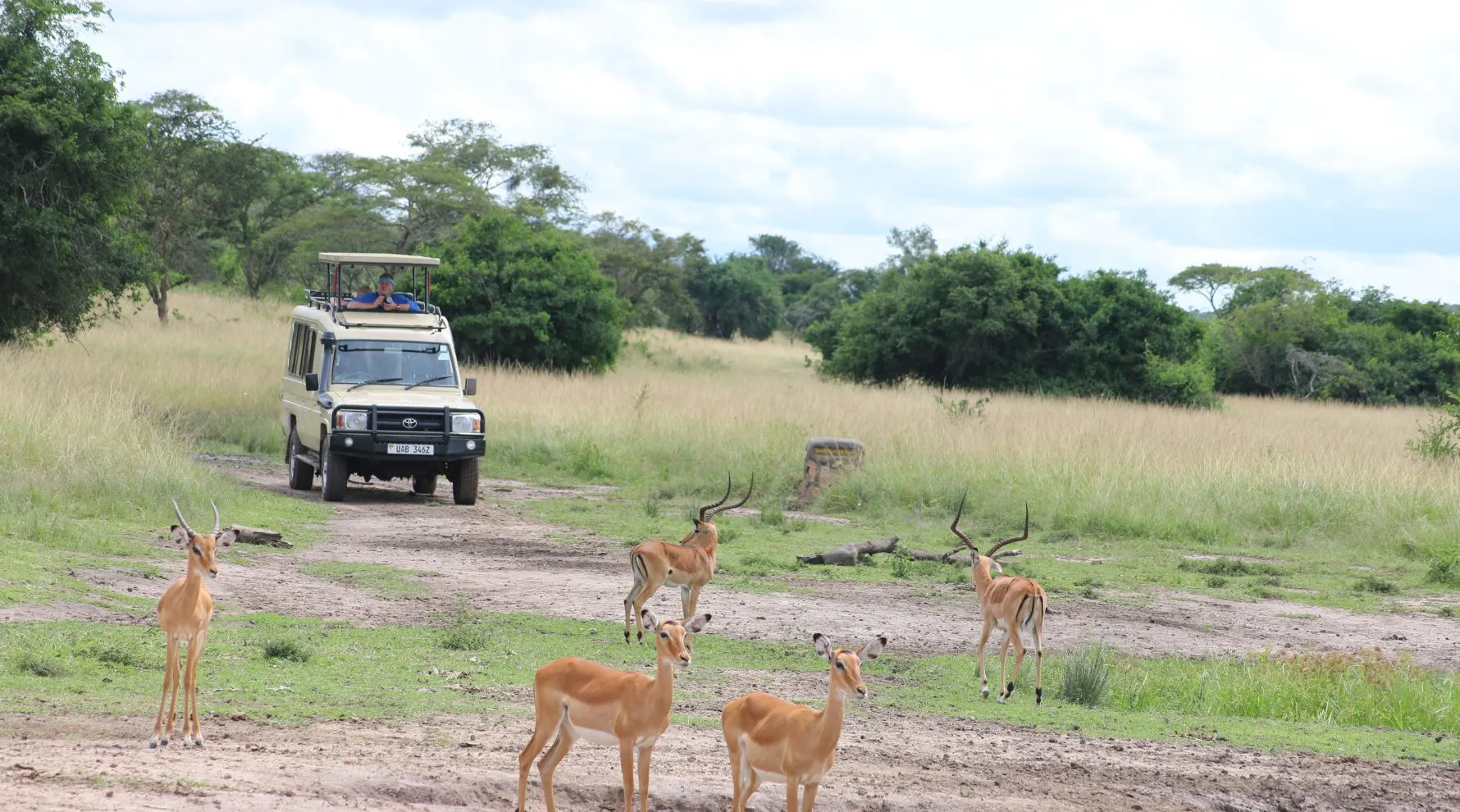
After breakfast, we continue on to Lake Mburo National Park. Numerous rocky outcrops and hills interspersed with small valleys dot the landscape. Upon arrival at the park, you’ll embark on a game drive. Here you’ll find zebras and antelopes, along with the impressive Ankole cattle.
Day 19: Activities in Lake Mburo National Park
Today you’ll set off on your first game drive. The Ankole cattle, with their distinctive horns, are a particularly striking feature of Lake Mburo National Park. Zebras, impalas, and reedbuck are frequently seen even outside the park boundaries. The lake, after which the park is named, is home to crocodiles, hippos, and a large number of rare birds. Walking safaris are permitted in Lake Mburo National Park. Accompanied by an experienced ranger, you’ll explore the park. The guide will show you the animal footprints and identify the animals that have been there. Alternatively, you can take a boat safari on the lake. You’ll be amazed by the many hippos, crocodiles, and birdlife. The lodge offers the option of a horseback safari for an additional fee.
Day 20: Lake Mburo National Park – Entebbe
After a hearty breakfast, we’ll embark on one last game drive through the park before returning to Entebbe. Of course, we’ll stop at the equator for a memorable photo.
Day 21: Departure Day – Entebbe Airport (EBB)
Depending on your departure time, the last day of your Uganda trip offers the opportunity for a city tour of Kampala or a visit to the Botanical Gardens in Entebbe. Your driver will take you to Entebbe Airport or to your onward travel arrangements in time for your flight.