- 4x4 Selfdrive Uganda
- +256 701819223
- +256 774819223
- info@4x4selfdriveuganda.com

4×4 Car Rental in Uganda with one-way drop-off in Dar es Salaam
September 3, 2026
4×4 Car Rental with Double Rooftop Tents in Uganda
September 7, 2026
4×4 Car Rental in Uganda with Drop-Off in Nairobi, Kenya
The Complete 2026 Guide to One-Way Cross-Border Self-Drive Safaris
Vehicles · Routes & Borders · Documents · Costs · Sample Itinerary · FAQs
Why Rent a 4×4 in Uganda and Drop It Off in Nairobi?
A one-way, cross-border self-drive rental — pick up your 4×4 in Entebbe or Kampala and hand it back in Nairobi — is one of the most efficient ways to link Uganda’s forests and savannahs with Kenya’s Great Migration plains, without ever backtracking to your starting point. Instead of flying between the two countries and losing the overland experience, you drive out through the Rift Valley’s border towns, cross into Kenya at your own pace, and finish the trip on the doorstep of Jomo Kenyatta International Airport.
This kind of trip suits travelers combining Uganda’s gorilla and chimpanzee trekking, Murchison Falls, or Queen Elizabeth National Park with a Maasai Mara safari, or simply anyone relocating between the two capitals who would rather drive than fly. It does, however, involve more paperwork than a standard rental: a cross-border insurance certificate, a temporary import permit for the vehicle, and a drop-off fee that reflects the one-way relocation. This guide walks through all of it.
| QUICK FACTS
Direct road distance from Kampala to Nairobi via the Malaba border is roughly 650–660 km, comfortably a full day of driving including the border crossing. Two main land border posts connect Uganda and Kenya on this route: Malaba and Busia, both one-stop border posts with tarmac approach roads on both sides. Every vehicle needs a COMESA Yellow Card (regional third-party insurance) and a Kenyan temporary import permit (Form C32) to cross legally. The East Africa Tourist Visa (USD 100, 90 days, multiple entry) covers Uganda, Kenya, and Rwanda on one application and is usually simpler than buying separate entry permits. |
Choosing the Right 4×4 for the Trip
Since this itinerary usually mixes national park tracks in Uganda with tarmac highway in Kenya, the ideal vehicle needs to be as comfortable on the A104 highway as it is on murram park roads. The table below compares the most commonly rented options for this route.
| Vehicle | Best For | Fuel | Daily Rate (USD, approx.) |
| Toyota RAV4 (4WD) | Tarmac-heavy routes, couples or solo travelers on a budget | Petrol | $45 – $90 |
| Toyota Land Cruiser Prado | Balanced comfort and off-road capability for families or small groups | Diesel | $90 – $160 |
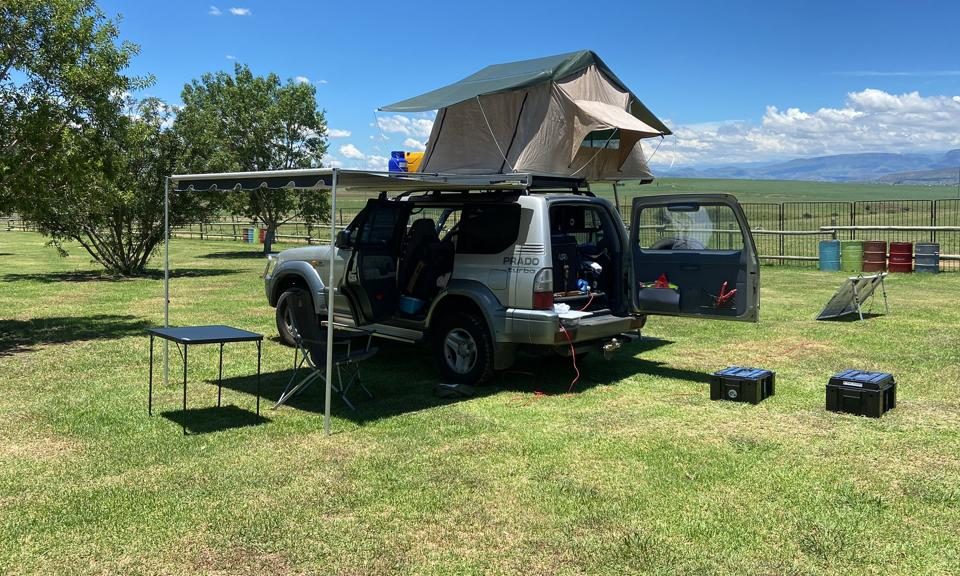
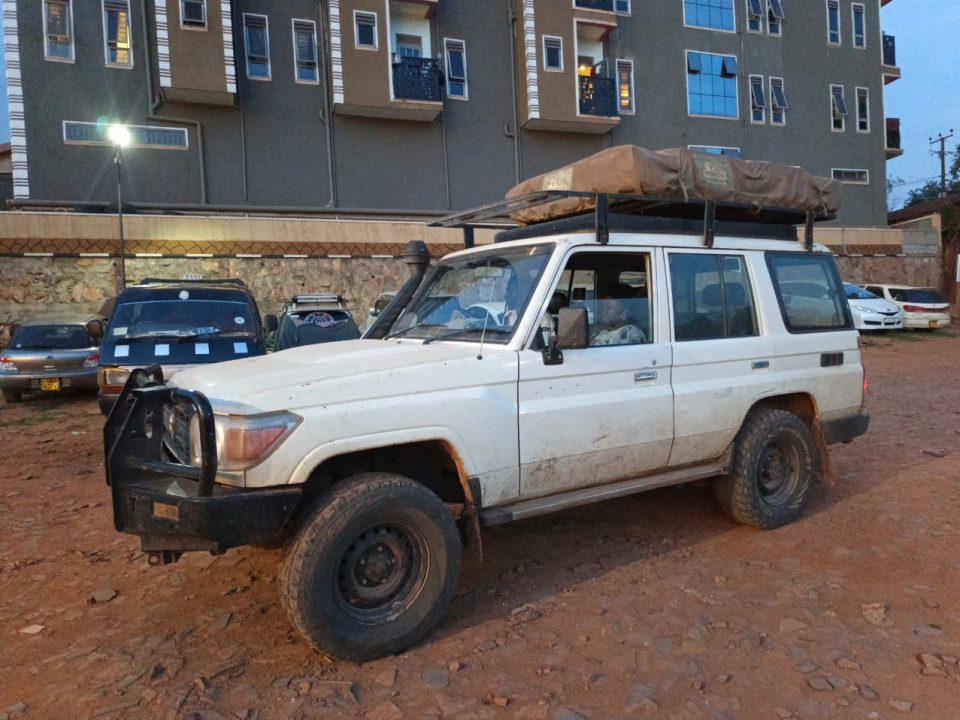
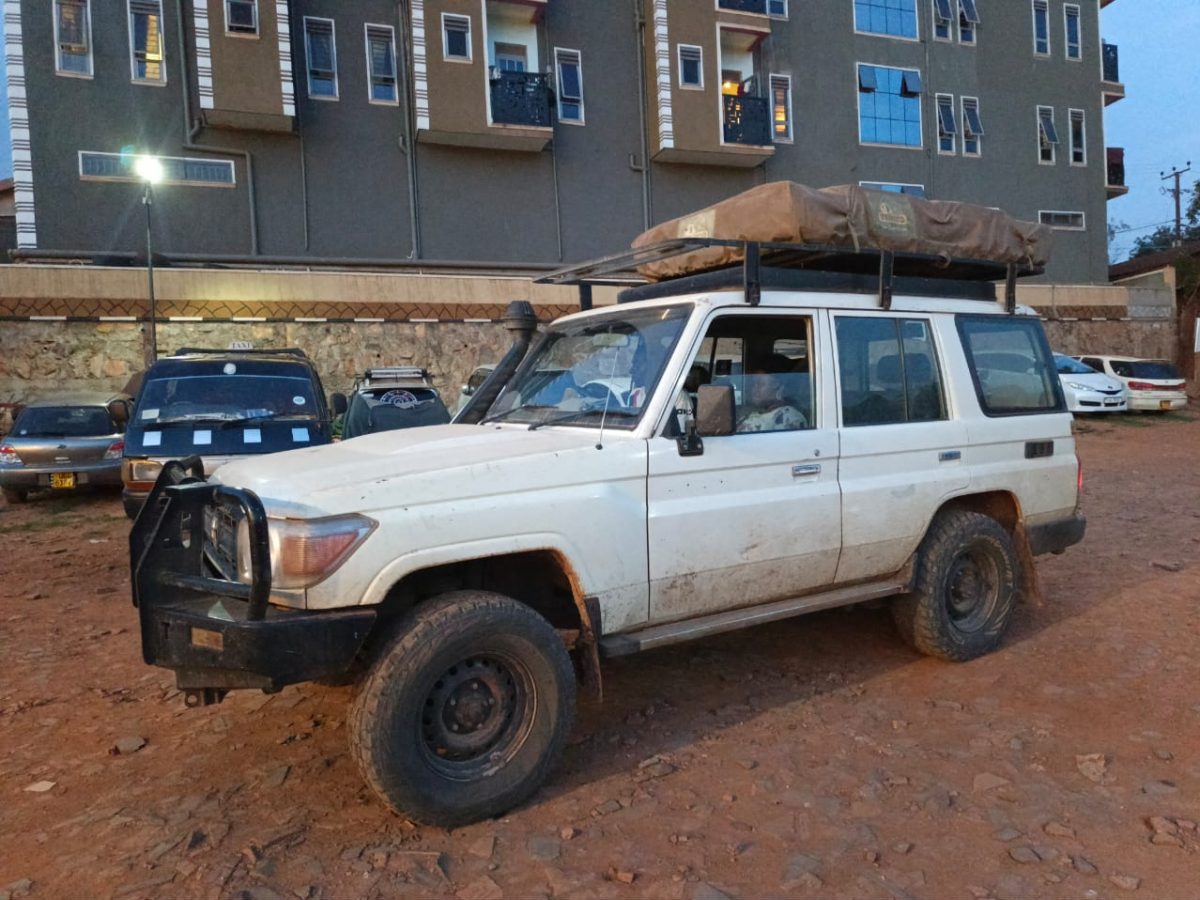
| Land Cruiser 76/79 Series w/ Rooftop Tent | Full camping self-drive across parks in both countries | Diesel | $130 – $220 |
| Toyota Hilux Double Cab (w/ Rooftop Tent option) | Rugged routes, extra cargo space, small groups | Diesel | $100 – $180 |
For a trip that includes Ugandan national parks and a stop in the Maasai Mara, a diesel 4×4 with high clearance — a Prado or a Land Cruiser 76/79 Series — is the safer choice over a RAV4, particularly in the rainy season when murram park tracks turn slick. A rooftop tent set-up also removes the need to pre-book every night’s accommodation, which is useful on a route with several long driving days.
Route Options from Uganda to Nairobi
There are two broad ways to make this drive: the direct highway route, best suited to travelers who want to reach Nairobi efficiently, and a longer safari route that folds in a Maasai Mara stop before continuing to the capital.
| Route | Approx. Distance | Driving Time | Highlights | |
| Direct via Malaba | ~655 km (Kampala–Nairobi) | 1 long day (10–12 hrs incl. border) | Jinja, Tororo, Eldoret, Nakuru, the Rift Valley escarpment | |
| Direct via Busia | ~650 km (Kampala–Nairobi) | 1 long day (10–12 hrs incl. border) | Similar profile to Malaba; useful if approaching from Jinja’s northern side | |
| Safari route via Maasai Mara | ~850–900 km over 3–4 days | Spread across several days | Malaba border, Kisumu/Kakamega, Narok, Maasai Mara National Reserve, then Nairobi | |
| PLANNING TIP
The Malaba–Eldoret–Nakuru–Nairobi highway (the A104) is a well-maintained, mostly two-lane tarmac road, but it also carries heavy long-haul truck traffic on the Northern Corridor to Mombasa. Budget extra time around Eldoret and the Nakuru descent, where trucks and roadworks are most common. |
||||
Cross-Border Documents You’ll Need
Crossing an international border with a rented vehicle involves more than a passport stamp. Confirm each of the following with your rental company well before departure — a missing document is the single most common cause of delay at Malaba or Busia.
- Passport: Valid for at least six months beyond your travel dates.
- Visa or eTA: Either the East Africa Tourist Visa (USD 100, 90 days, multiple entry, covers Uganda, Kenya, and Rwanda) or separate entry permissions — Uganda’s single-entry e-visa (around USD 50) plus Kenya’s Electronic Travel Authorization, or eTA (around USD 30–51 depending on entry type). The regional visa is usually the simpler and often cheaper option once a Uganda-Kenya crossing is involved.
- Driving license: A Ugandan driving license is generally recognized in Kenya, but carrying an International Driving Permit alongside your home license is a sensible extra safeguard, especially for visitors who are not Uganda-licensed.
- Yellow Fever vaccination certificate: Border officials on both sides do check for this, so keep a physical copy accessible.
- COMESA Yellow Card: Regional third-party motor insurance that extends cover into COMESA member states, including Kenya. Your rental company arranges this per vehicle for the trip; typical cost is USD 20–50.
- Logbook & Letter of Authority: The vehicle’s registration book plus a signed letter from the rental company naming you as the authorized driver and confirming the vehicle may leave Uganda. Immigration and customs officers at both Busia and Malaba will ask for this specifically.
- Temporary Import Permit: A customs document (Form C32 on the Kenyan side) issued at the border that allows the foreign-registered vehicle to circulate in Kenya temporarily — typically valid 14 days, extendable through Kenya Revenue Authority offices for genuine reasons.
| CAUTION
Do not attempt to cross without the Letter of Authority from your rental company. Officials at both Busia and Malaba will refuse passage for a vehicle without proof that the renter is authorized to take it out of the country of registration. |
What the Trip Actually Costs
A one-way Uganda-to-Nairobi rental has a few extra line items beyond the daily vehicle rate. Below is a realistic breakdown to budget against; always ask for a written, itemized quote before booking.
| Cost Item | Typical Range (USD) | Notes | |
| Daily vehicle rental | $45 – $220 / day | Depends on vehicle class; see comparison table above | |
| One-way drop-off fee | $150 – $450 | Set by the rental company for relocating the vehicle back to Uganda; some waive it on longer rentals | |
| COMESA Yellow Card | $20 – $50 | Per vehicle, for the duration of the cross-border trip | |
| Kenya temporary import permit | Often bundled / nominal | Processed at the border by customs alongside the Letter of Authority | |
| East Africa Tourist Visa (per person) | $100 | Alternative: Uganda e-visa ~$50 + Kenya eTA ~$30–51 separately | |
| Fuel, Kampala to Nairobi leg | $90 – $160 | Diesel Land Cruiser/Prado over ~650 km; varies with vehicle and fuel prices | |
| PLANNING TIP
Ask specifically whether the drop-off fee is flat or scales with rental duration — some Uganda-based operators reduce or waive it for rentals of ten days or longer, since the vehicle would otherwise need to be driven back empty. |
|||
Sample 10-Day Uganda-to-Nairobi Self-Drive Itinerary
This sample itinerary links two of Uganda’s flagship parks with a Malaba border crossing and a Maasai Mara safari before the Nairobi drop-off — a realistic pace for a diesel 4×4 with a rooftop tent.
- Day 1 — Collect the vehicle in Entebbe, complete paperwork, and drive to Murchison Falls National Park.
- Days 2–3 — Game drives on the delta and northern bank, plus the launch cruise to the base of the Falls.
- Day 4 — Drive south to Queen Elizabeth National Park via Fort Portal or Kasese.
- Day 5 — Game drives, the Kazinga Channel boat cruise, and the Ishasha sector’s tree-climbing lions.
- Day 6 — Drive east toward Mbale, at the foot of Mount Elgon, breaking the long haul to the border into two manageable legs.
- Day 7 — Cross into Kenya at Malaba (budget half a day for immigration, customs, and the temporary import permit), then continue to Kisumu or Kakamega for the night.
- Day 8 — Drive south via Kericho and Narok to the Maasai Mara National Reserve.
- Day 9 — Full day of game drives on the Mara plains.
- Day 10 — Drive from the Mara to Nairobi via Narok, and drop the vehicle off in the city or at Jomo Kenyatta International Airport.
| GOOD TO KNOW
This pace assumes early starts and no more than 6–7 hours of driving on any single day, which keeps arrivals well before dusk. Compress it to 7–8 days by skipping the Mara, or extend it with a Lake Nakuru or Naivasha stop between Eldoret and Narok. |
Step by Step: Crossing at Malaba or Busia
- Park on the Ugandan side and present your passport at Uganda immigration for an exit stamp.
- Present the vehicle logbook, Letter of Authority, and COMESA Yellow Card at the Uganda Revenue Authority customs desk to clear the vehicle for exit.
- Walk or drive across to the Kenyan side of the one-stop border post — both Malaba and Busia are compact enough to cross on foot if you prefer to handle paperwork before moving the vehicle.
- Present your passport and approved eTA or East Africa Tourist Visa at Kenyan immigration for an entry stamp.
- Present the logbook, Letter of Authority, and COMESA Yellow Card at Kenya Revenue Authority customs to be issued a Form C32 temporary import permit for the vehicle.
- Once both immigration and customs formalities clear on the Kenyan side, you’re free to continue on the A104 toward Bungoma, Eldoret, and Nakuru.
| PLANNING TIP
Aim to arrive at the border in the mid-morning. Both posts get busiest with commercial truck traffic in the early morning and again in the late afternoon, and processing a private vehicle typically takes 45–90 minutes outside those peaks. |
Road Conditions Along the Way
Kampala to the Border
The route out of Kampala through Jinja, Iganga, and Tororo to either Malaba or Busia is sealed tarmac throughout, though it carries heavy long-distance truck traffic on the Northern Corridor and passes through several busy trading towns with speed bumps and roadside markets.
The Border to Nairobi (A104)
On the Kenyan side, the A104 from Malaba through Bungoma, Eldoret, and Nakuru to Nairobi is a well-maintained two-lane highway for its full length, though sections around Eldoret and the descent into Nakuru can be congested with trucks and periodic roadworks. The stretch past Nakuru and over the Rift Valley escarpment toward Naivasha offers some of the most dramatic scenery on the entire route.
| GOOD TO KNOW
Driving is on the left in both Uganda and Kenya, which keeps the transition simple. Avoid driving after dark on this route — unlit trucks, boda bodas, and livestock on the road are the main hazards, and neither country’s rural stretches are well lit. |
Packing and Safety Checklist
- Documents: Printed and digital copies of your passport, visa/eTA approval, driving license, IDP, yellow fever certificate, vehicle logbook, and Letter of Authority.
- Vehicle kit: A functioning spare tyre, jack, and basic tool kit — standard on all reputable rental 4x4s, but worth confirming before departure.
- Cash: Both Ugandan Shillings and Kenyan Shillings for fuel, tolls, and roadside purchases; USD is useful for visa and insurance fees.
- Navigation: A local SIM card or roaming data plan, plus offline maps (Google Maps or Maps.me) downloaded before departure, since signal is patchy in parts of western Kenya.
- Fuel discipline: Filling up before leaving major towns, since fuel stations thin out on the more rural stretches between the border and Eldoret.
- Drop-off: Confirm the exact Nairobi drop-off address and time in writing, and photograph the vehicle’s condition at both pick-up and drop-off to avoid disputes over damage.
Frequently Asked Questions
Can any rental car in Uganda be driven across the border to Kenya?
No — only vehicles the rental company has specifically approved and documented for cross-border travel. Confirm at the time of booking that your vehicle will be issued a COMESA Yellow Card and Letter of Authority for a Uganda-to-Kenya trip, since not every vehicle in a company’s fleet is cleared for it.
How long can a Uganda-registered vehicle stay in Kenya?
The temporary import permit issued at the border is typically valid for 14 days. Extensions of up to 90 days can be requested through Kenya Revenue Authority’s Customs and Border Control offices before the permit expires, though this usually requires a justified reason and physical inspection of the vehicle.
Do I need the East Africa Tourist Visa, or can I use separate visas?
Either works. The East Africa Tourist Visa (USD 100, 90 days, multiple entry) covers Uganda, Kenya, and Rwanda on one application and must be obtained through the country of first entry. Buying Uganda’s single-entry e-visa and Kenya’s eTA separately is also valid, and can work out similarly priced depending on entry type, but requires two separate applications and approvals.
Is the COMESA Yellow Card the same as the vehicle’s temporary import permit?
No, they’re two different documents. The COMESA Yellow Card is regional third-party motor insurance. The temporary import permit (Form C32 in Kenya) is a customs document that authorizes the foreign-registered vehicle to circulate in the country temporarily. Both are required at the border.
What happens if my one-way rental runs into a mechanical issue mid-route?
Reputable operators offering cross-border one-way rentals maintain support contacts on both sides of the border, or partner with a Kenyan affiliate for roadside assistance once you’ve crossed. Confirm this arrangement, and the relevant phone numbers, before you set out.
Final Thoughts
A Uganda-to-Nairobi one-way rental turns two separate country visits into a single overland safari, but it only runs smoothly with the right paperwork sorted in advance — the COMESA Yellow Card, the Letter of Authority, and either the East Africa Tourist Visa or the correct pair of national entry permits. Once that’s arranged, the drive itself — Murchison Falls or Queen Elizabeth in the morning light, the Rift Valley escarpment in the afternoon, the Mara’s open plains a few days later — is one of East Africa’s most rewarding road trips.