- 4x4 Selfdrive Uganda
- +256 701819223
- +256 774819223
- info@4x4selfdriveuganda.com

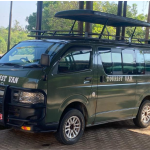
Safari Van Rental in Uganda
September 8, 2026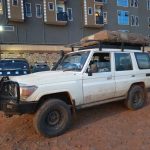
Toyota Land Cruiser LX with Rooftop Tent
September 8, 2026
Car Rental Border Crossing Documents
| Quick Answer
Crossing an East African border in a rental car legally requires seven things: the vehicle logbook, a COMESA Yellow Card, a Temporary Import Permit or Road Service Permit, a cross-border authorization letter from the rental company, a valid driving licence (national or international), your passport with the correct visa, and comprehensive rental insurance that names cross-border cover. Missing even one document can mean turned away at the border, impounded vehicles, or invalidated insurance. |
Self-drive safaris that cross national boundaries – Uganda into Rwanda for gorilla trekking, Kenya into Tanzania for the Great Migration, or a full Kigali-Serengeti-Zanzibar overland route – have become one of the most requested itineraries among independent East African travelers. But a rental vehicle is not automatically permitted to leave the country it is registered in. Every border post in the region checks a specific stack of paperwork before waving a private or rental vehicle through, and the requirements differ slightly by country and by border post. This guide walks through every document a self-drive traveler needs, why immigration and customs officials ask for it, how to obtain it in advance, and what typically goes wrong when travelers arrive unprepared.
In This Guide
- Why border crossing documents matter for rental vehicles
- The seven essential documents, explained
- Country-specific requirements: Uganda, Kenya, Tanzania, Rwanda
- Step-by-step: what happens at the border post
- Costs and processing times
- Common mistakes that get travelers turned back
- Documents checklist
- Frequently asked questions
1. Why Border Documents Matter for a Rental Vehicle
A privately owned car and a rental car are treated very differently at an East African border post. Immigration checks the driver; customs and traffic police check the vehicle. Because a rental vehicle is registered to a company, not to the traveler driving it, officials need proof that the company has authorized the vehicle to leave the country and that the correct regional insurance and import duties are in order. Without that proof, a vehicle can be legally treated as an attempted unauthorized export of company property, which is why border officials are strict about it.
Three separate authorities are usually involved at a single crossing:
- Immigration – checks the driver’s passport, visa or East Africa Tourist Visa, and driving licence.
- Customs – checks the vehicle’s registration, the Temporary Import Permit, and confirms the vehicle will not be sold or permanently imported.
- Traffic police / Road Transport authority – checks the COMESA Yellow Card, roadworthiness, and in some cases a Road Service Permit or COMESA carnet.
Understanding this three-way split explains why a single missing document can stall a crossing even if everything else is perfect – each authority is looking for a different piece of paper
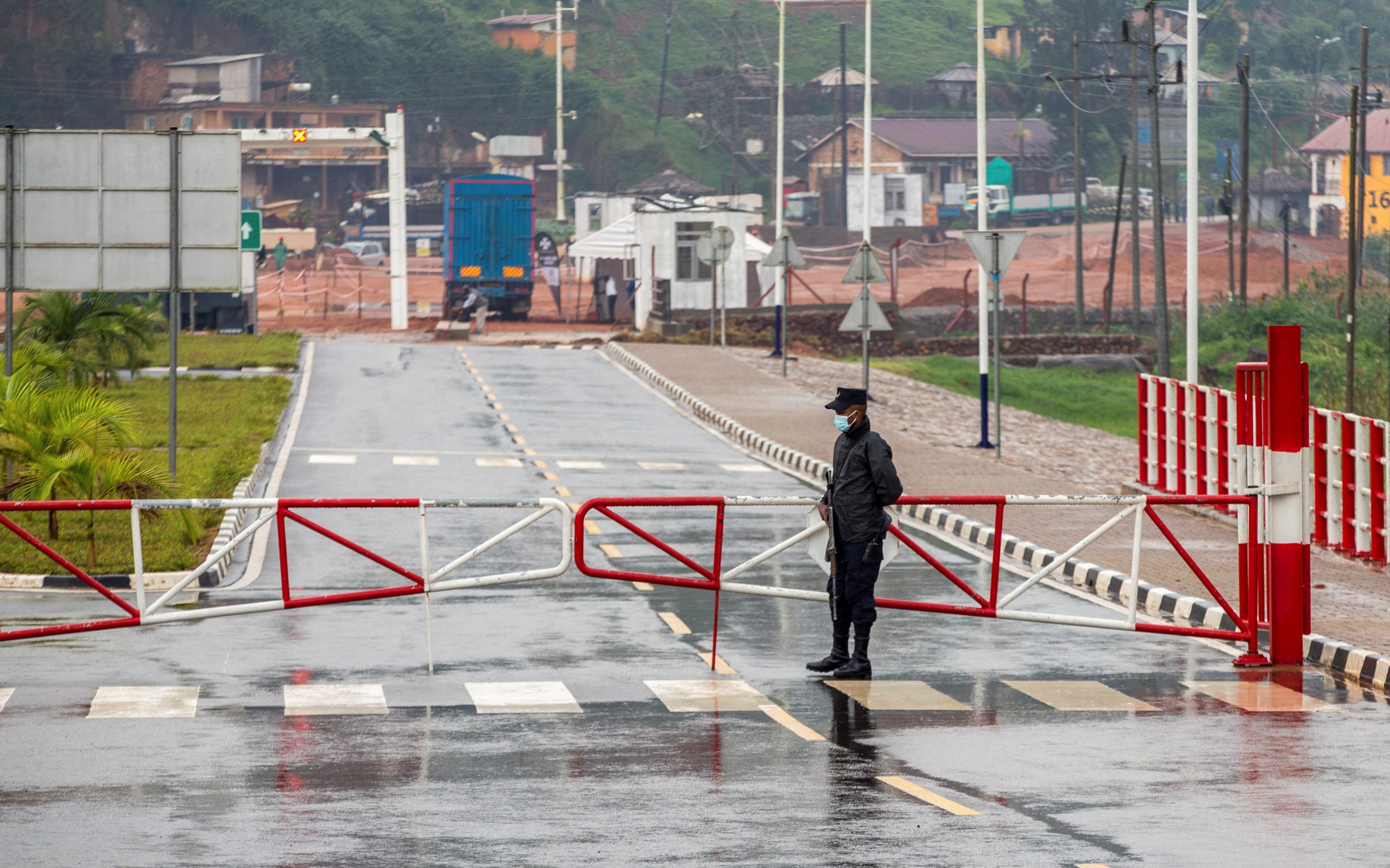
A Rwandan police officer stands guard at the barrier of the Gatuna one-stop border post at Gicumbi, northern Rwanda, January 31, 2022. REUTERS/Jean Bizimana
The Seven Essential Documents
Vehicle Logbook (Registration Certificate)
The original vehicle logbook, or a certified copy carried alongside a company authorization letter, proves the vehicle is legally registered and roadworthy in its home country. Customs at every border in the region will ask to see it and match the number plate and chassis number against the physical vehicle. Most reputable rental companies keep the original locked at head office and issue travelers a certified copy plus a letter explaining the arrangement – confirm this is included before departure, since a photocopy alone is sometimes rejected.
COMESA Yellow Card (Regional Third-Party Insurance)
The COMESA Yellow Card is the single most important cross-border document for a self-drive traveler. It is a regional third-party motor insurance scheme recognized across the Common Market for Eastern and Southern Africa, which includes Uganda, Kenya, Rwanda, Burundi, and the DRC. Tanzania sits outside COMESA but recognizes the Yellow Card under a reciprocal arrangement at most crossings, so it remains necessary for Uganda-Tanzania and Kenya-Tanzania routes as well. Without a valid Yellow Card, a vehicle is simply not permitted to cross, since it has no insurance cover the moment it leaves its home country. Rental companies that offer cross-border drop-offs arrange the Yellow Card as part of the package; it typically needs to be requested at least three to five working days before departure.
Temporary Import Permit (TIP) / Road Service Permit
Because the vehicle is being driven into a country it is not registered in, customs issues a Temporary Import Permit that allows it to remain for a set number of days without incurring import duty. Kenya and Tanzania issue this directly at the border; Uganda’s version is sometimes referred to as a Road Service Licence for commercial-style cross-border operators. The permit specifies an exit deadline – overstaying it can trigger import duty charges calculated on the vehicle’s value, so travelers should confirm the return date matches their itinerary with a buffer of one or two days.
Cross-Border Authorization Letter from the Rental Company
Because the driver is not the registered owner, a signed and stamped letter from the rental company is required at every crossing. This letter should state the vehicle’s registration and chassis numbers, confirm the company authorizes the named driver(s) to take the vehicle out of the country for the dates of the rental, and provide a contactable phone number for verification. Some border posts call the number listed to confirm authenticity, so travelers should notify their rental company of the exact crossing date and time in advance.
Valid Driving Licence (National or International)
A driver’s home-country licence is accepted at most East African borders provided it is printed in English or accompanied by a certified translation, and provided it carries a valid photograph. Travelers from non-English-speaking countries, or those who prefer not to risk any ambiguity, are advised to carry an International Driving Permit (IDP) alongside their national licence – it is inexpensive, obtained before departure through the issuing country’s automobile association, and removes any language question at the checkpoint.
Passport and Correct Visa
Immigration checks the passport’s validity (most East African countries require at least six months remaining) and the visa status for both the country being exited and the one being entered. The East Africa Tourist Visa – a single visa covering Kenya, Uganda, and Rwanda – is the most convenient option for travelers doing a multi-country self-drive loop within those three countries, since it removes the need for a fresh visa at each crossing. Tanzania is not part of that scheme and requires its own separate visa or e-Visa regardless of what the traveler holds for the other three countries.
Comprehensive Rental Insurance Naming Cross-Border Cover
The COMESA Yellow Card covers third-party liability, but it does not cover damage to the rental vehicle itself. Travelers should confirm in writing, before departure, that their rental agreement’s comprehensive cover (collision damage waiver, theft protection) explicitly extends to cross-border driving – some standard rental policies exclude coverage the moment a vehicle leaves its home country unless a cross-border rider has been added and paid for.
Country-Specific Requirements
Uganda
- COMESA Yellow Card mandatory for exit.
- Original or certified logbook plus rental company authorization letter.
- East Africa Tourist Visa accepted for onward travel to Kenya or Rwanda.
- Common exit points for self-drive travelers: Katuna/Gatuna and Cyanika (into Rwanda), Malaba and Busia (into Kenya), Mutukula (into Tanzania).
Kenya
- COMESA Yellow Card mandatory; checked on both exit and re-entry.
- Temporary Import Permit issued at the border for vehicles entering Kenya on a foreign registration.
- Kenya eTA (electronic travel authorization) required for entry, in addition to or instead of the East Africa Tourist Visa depending on nationality – confirm current requirements before travel.
- Common crossings: Namanga and Isebania (into Tanzania), Malaba and Busia (into Uganda).
Tanzania
- Not a COMESA member, but recognizes the Yellow Card at most crossings under reciprocal agreements – carry it regardless.
- Requires its own visa or e-Visa; not covered by the East Africa Tourist Visa.
- Temporary Import Permit issued at the border, with fees payable in US dollars at some posts.
- Common crossings: Namanga and Horohoro (from Kenya), Mutukula and Rusumo Falls (from Uganda and Rwanda).
Rwanda
- COMESA Yellow Card mandatory.
- East Africa Tourist Visa accepted for travelers arriving from Kenya or Uganda.
- Rwanda’s border posts are generally considered the most efficient in the region for vehicle processing, with most self-drive crossings completed within 30 to 45 minutes when documents are in order.
- Common crossings: Cyanika and Katuna/Gatuna (from Uganda), Rusumo Falls (from Tanzania).
Step-by-Step: What Happens at the Border Post
- Park in the designated vehicle inspection area, not in the general parking, and switch off the engine before approaching any window.
- Complete exit immigration first – passports and visas are checked, and an exit stamp is issued for each traveler.
- Proceed to customs with the vehicle logbook, COMESA Yellow Card, and rental authorization letter; the officer records the chassis and engine numbers against the paperwork.
- A physical inspection of the vehicle sometimes follows, matching the number plate, chassis number stamped on the chassis, and engine number to the documents.
- Cross the neutral zone (the physical distance between the two countries’ posts, ranging from a few meters to several hundred meters depending on the border).
- Complete entry immigration on the other side – visa or East Africa Tourist Visa checked, entry stamp issued.
- Complete entry customs – a new Temporary Import Permit is issued for the vehicle, valid for a stated number of days, and any applicable fee is paid.
- Keep every stamped document accessible in the vehicle for the remainder of the trip; roadblocks well inside the country will ask to see the same paperwork again.
| Field Tip
Arrive at border posts before 3:00 PM wherever possible. Processing a vehicle takes considerably longer than processing a pedestrian traveler, and several East African border posts close vehicle lanes to new arrivals in the late afternoon even though the pedestrian gate stays open later. |
Costs and Processing Times
| Document | Typical Cost | Where Obtained | Processing Time |
| COMESA Yellow Card | $20–$60 per border crossing (varies by vehicle class) | Rental company or insurer, in advance | 3–5 working days |
| Temporary Import Permit | $0–$40, paid at the border | Customs desk at the border post | 20–45 minutes on arrival |
| Rental authorization letter | Usually included in rental fee | Rental company | 1–2 working days |
| East Africa Tourist Visa | $100 (single visa, three countries) | Online, before travel | 2–5 working days |
| Tanzania visa / e-Visa | $50–$100 depending on nationality | Online or on arrival | Same day to 5 working days |
| International Driving Permit | $10–$20 | Home country automobile association | Same day to 2 weeks |
Common Mistakes That Get Travelers Turned Back
- Requesting the COMESA Yellow Card the day before departure – most insurers need three to five working days, and a border post will not accept a promise that it is “on its way.”
- Assuming the East Africa Tourist Visa covers Tanzania – it does not, and travelers heading into the Serengeti or Zanzibar from Kenya or Uganda need a separate Tanzanian visa arranged beforehand.
- Carrying only a photocopy of the logbook with no rental company letter – customs officers at several posts will not accept a photocopy alone as proof of authorization.
- Letting the Temporary Import Permit’s exit deadline lapse – even a one-day overstay can trigger an import duty assessment on the full value of the vehicle.
- Assuming standard rental insurance automatically covers cross-border driving – many policies exclude it unless a cross-border rider is purchased in advance.
- Arriving at a remote border post outside its operating hours – several smaller crossings used for gorilla-trekking routes (such as Cyanika) keep shorter hours than the main highway posts.
Documents Checklist
|
Carry These at Every Crossing 1. Vehicle logbook (original or certified copy) 2. COMESA Yellow Card 3. Temporary Import Permit from the previous border (if applicable) 4. Rental company cross-border authorization letter 5. Driving licence + International Driving Permit 6. Passport with valid visa or East Africa Tourist Visa 7. Proof of comprehensive insurance with cross-border cover 8. Printed rental agreement and emergency contact numbers for the rental company |
Frequently Asked Questions
Can I cross a border in any rental car, or does it need special permission?
Only vehicles the rental company has specifically approved for cross-border travel can leave the country. Not every rental fleet vehicle is covered by a Yellow Card or authorized for export, so cross-border intentions must be confirmed with the rental company before booking, not after.
How far in advance should I arrange the COMESA Yellow Card?
At least three to five working days before the planned crossing date. Confirm the exact date and route with the rental company as early as possible, since some insurers require the specific border post to be named on the certificate.
Does the East Africa Tourist Visa cover Tanzania?
No. The East Africa Tourist Visa covers only Kenya, Uganda, and Rwanda. Tanzania requires a separate visa or e-Visa regardless of which of the other three countries a traveler is arriving from.
What happens if the Temporary Import Permit expires while I’m still in the country?
The vehicle can be liable for import duty calculated on its value, and in some cases can be detained until the matter is resolved with customs. Always build in a buffer of one to two extra days beyond the planned return date when the permit is issued.
Is a driving licence from my home country enough, or do I need an International Driving Permit?
A national licence printed in English with a photograph is usually accepted, but an International Driving Permit removes any ambiguity and is inexpensive to obtain, so most rental companies recommend carrying one for any multi-country self-drive itinerary.
Which borders are the most straightforward for a self-drive crossing?
Rwanda’s crossings, particularly Cyanika, are generally the fastest to process for self-drive travelers when documents are complete. Larger commercial posts such as Malaba (Uganda-Kenya) and Namanga (Kenya-Tanzania) handle far higher freight volumes and can involve longer waits, so arriving early in the day is especially important there.