- 4x4 Selfdrive Uganda
- +256 701819223
- +256 774819223
- info@4x4selfdriveuganda.com

4×4 Rooftop Tent Rental in Uganda
September 7, 2026
Car Rental Border Crossing Documents
September 8, 2026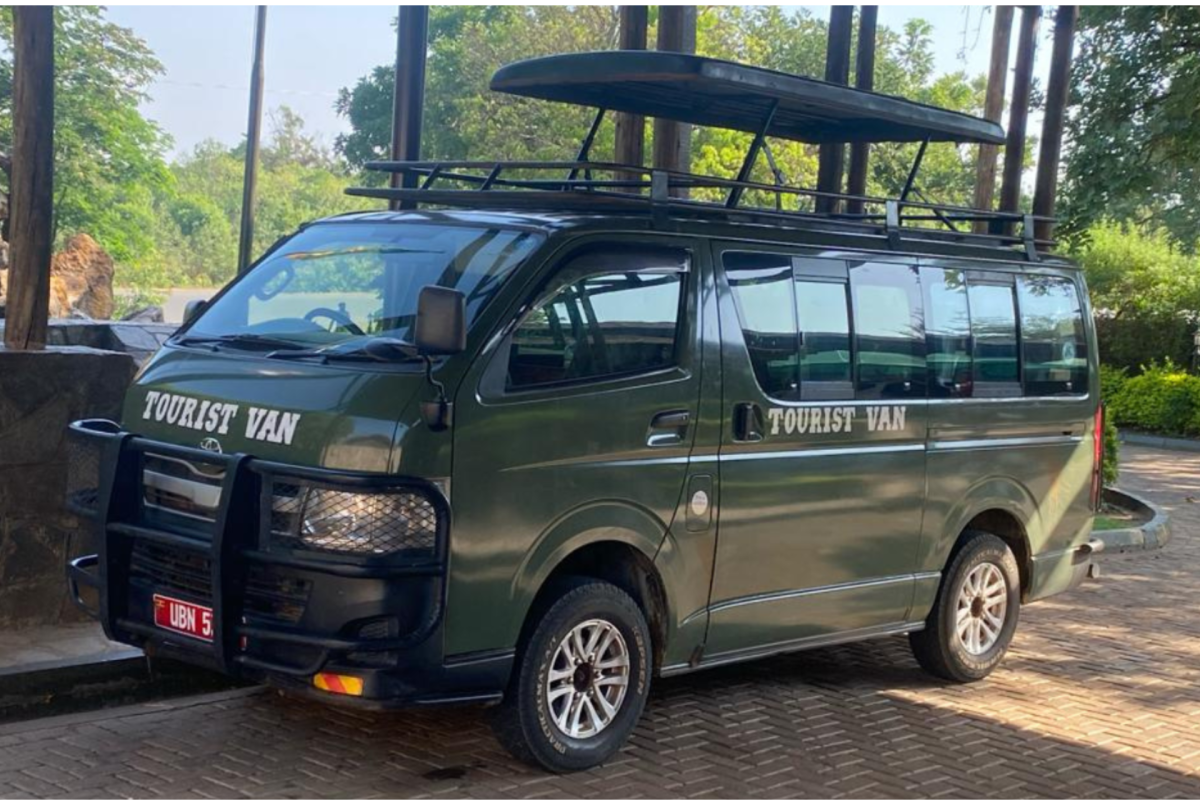
Safari Van Rental in Uganda
Uganda’s safari van rentals have become the backbone of group and family travel across the Pearl of Africa. Whether you are a family of six heading to Murchison Falls, a group of friends chasing tree-climbing lions in Ishasha, or a tour operator moving eight guests between lodges, a safari van strikes the balance between space, comfort, and cost that a sedan or a single 4×4 simply cannot match. This guide walks through every van type available in Uganda, what they cost, which parks they handle best, and how to book one with confidence.
| Quick Answer
Safari van rental in Uganda typically costs USD 80–150 per day depending on van size, pop-up roof, and whether a driver-guide is included. The Toyota Super Custom / Regius Van (7–8 seats) is the most popular choice for families and small groups. Coaster mini-buses (14–30 seats) suit larger groups, church trips, and corporate teams. Most Uganda safari vans come with a pop-up or sunroof for game viewing — always confirm this before booking. |
What Is a Safari Van?
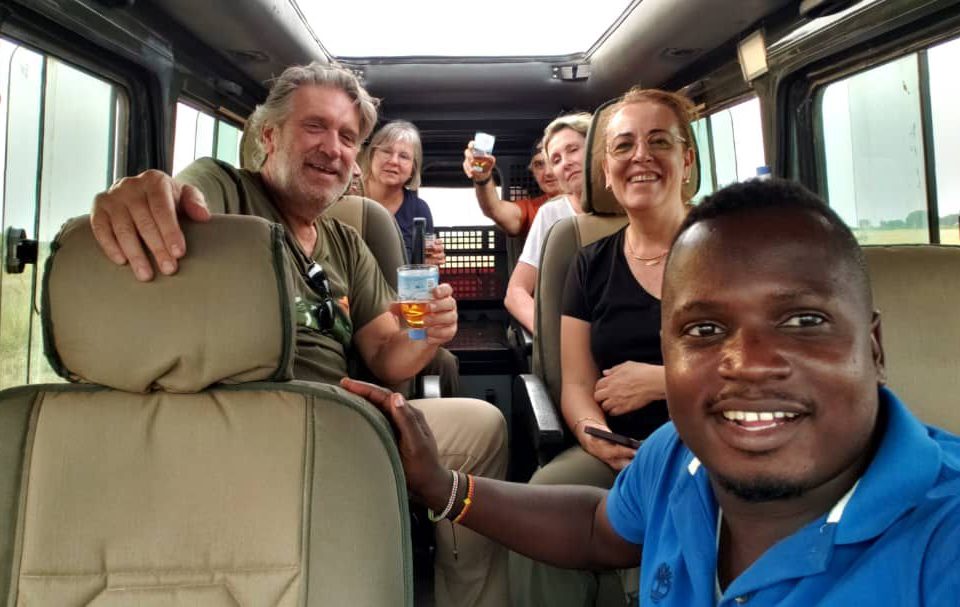
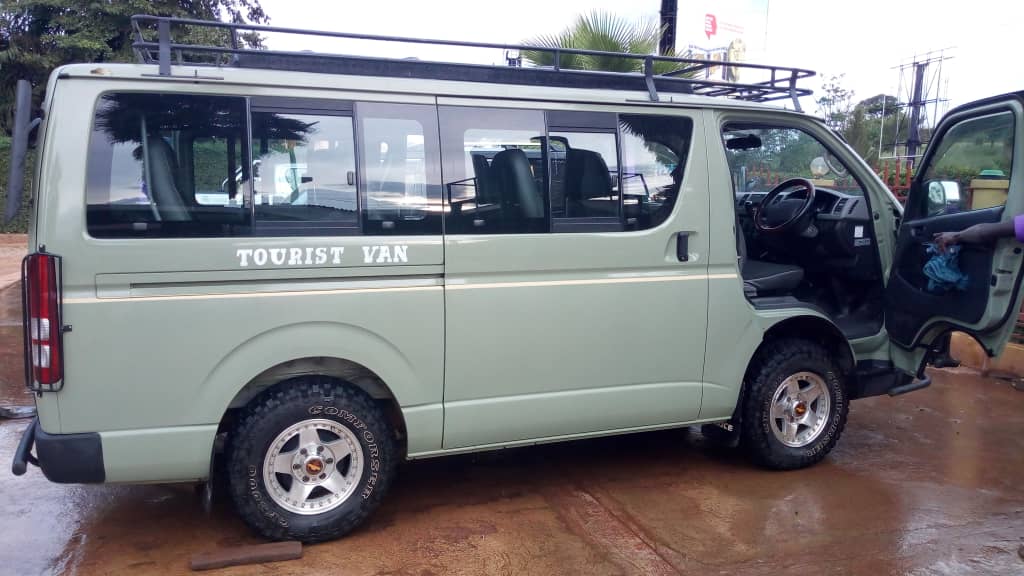
A safari van in the Uganda context is a passenger van — usually a Toyota Super Custom, Toyota Regius, Toyota Hiace, or Nissan Caravan — that has been adapted for tourism use. Adaptations typically include a pop-up or sliding sunroof for standing game viewing, high ground clearance modifications or all-terrain tyres, extra luggage racks, charging ports, and sometimes a small cooler box. Unlike a 4×4 Land Cruiser or RAV4, a safari van is built around passenger capacity and comfort rather than technical off-road ability, which makes it the natural choice whenever a group is larger than four people or the itinerary sticks mainly to maintained park roads and murram tracks rather than deep off-road terrain.
Vans are especially popular for itineraries that combine wildlife parks with cultural sites, city touring in Kampala and Entebbe, and airport transfers, because the extra seating and luggage space make multi-stop, multi-person trips far more practical than shuttling people in two or three smaller cars.
Why Choose a Safari Van Rental in Uganda
- Cost per person drops sharply. Splitting a single van rental and driver-guide fee across 6–14 travelers is almost always cheaper per head than renting multiple 4x4s.
- Everyone travels together. Families and groups stay as one unit for game drives, meals, and border crossings rather than being split across vehicles.
- Comfortable long-distance driving. Vans have more legroom and luggage space than sedans, which matters on long transfers such as Kampala–Murchison Falls (around 5–6 hours) or Kampala–Bwindi (up to 9 hours).
- Pop-up roofs give everyone a view. Most rental vans used for safaris are fitted with sunroofs so every passenger — not just those by the window — can stand and photograph wildlife.
- Flexible for mixed itineraries. A van suits travelers combining gorilla trekking, savannah game drives, city tours, and church or conference logistics within one trip.
Types of Safari Vans Available in Uganda
Toyota Super Custom / Regius Van (7–8 Seats)
The Toyota Super Custom (and its close relative, the Toyota Regius) is the most rented safari van in Uganda. It seats 7–8 passengers comfortably, has a manageable footprint for park roads and hotel driveways, and is frequently fitted with a pop-up roof. It is the default recommendation for families, honeymoon groups traveling with extended family, and small friend groups.
Toyota Hiace / Super GL (10–14 Seats)
A step up in size, the Hiace and Super GL variants are common for slightly larger groups, small tour companies, and travelers who need more luggage room for extended trips. Ground clearance is similar to the Super Custom, so route planning still matters on rougher park tracks.
Nissan Caravan / Urvan (7–14 Seats)
A widely available alternative to the Toyota lineup, often priced slightly lower. Reliability and parts availability are strong in Uganda given the vehicle’s popularity with local shuttle operators, though sunroof fitting varies by rental company and should be confirmed.
Toyota Coaster Mini-Bus (14–30 Seats)
For larger groups — church missions, corporate retreats, student trips, or big multi-generational families — the Coaster mini-bus is the standard choice. It always comes with a professional driver (self-drive is not offered for this class) and is best suited to park circuits with good road access such as Queen Elizabeth, Murchison Falls, and Lake Mburo.
| Van Type | Seats | Pop-Up Roof | Best For | Typical Daily Rate (USD) |
| Toyota Super Custom / Regius | 7–8 | Usually yes | Families, small groups | 90–150 |
| Toyota Hiace / Super GL | 10–14 | Optional | Mid-size groups, tour operators | 110–170 |
| Nissan Caravan / Urvan | 7–14 | Varies | Budget-conscious groups | 80–140 |
| Toyota Coaster Mini-Bus | 14–30 | No (large windows) | Large groups, corporate/church trips | 180–300 with driver |
Self-Drive vs. Chauffeur-Driven Safari Van
Self-Drive Safari Van
Self-drive is available for the Super Custom, Hiace, and Caravan classes, provided the renter holds a valid international driving permit and meets the rental company’s minimum age and experience requirements (typically 25 years and 3+ years of driving experience). Self-drive suits confident drivers who are comfortable navigating Kampala traffic, murram park roads, and Uganda’s driving-on-the-left convention, and who want full control over the pace of the trip.
Chauffeur-Driven Safari Van
Most visitors — especially first-time travelers to Uganda — opt for a driver-guide. This is effectively mandatory for the Coaster class and strongly recommended for anyone unfamiliar with East African road conditions, wildlife-viewing etiquette, or park navigation. A driver-guide adds roughly USD 25–50 per day but brings route knowledge, spotting skills for wildlife, help at ranger checkpoints, and a buffer against fatigue on long transfer days.
| Good to Know
Uganda drives on the left; most rental vans are right-hand drive. Fuel is not included in quoted daily rates unless explicitly stated. A driver-guide’s meals and accommodation on multi-day trips are usually the client’s responsibility — confirm this in writing before booking. |
Safari Van Rental Costs in Uganda
Rates vary by van size, age of the fleet, season, rental duration, and whether a driver is included. The table below gives realistic 2026 ranges for planning purposes; always request a written quote itemizing mileage limits, fuel, driver allowance, and insurance.
| Rental Length | Super Custom (Self-Drive) | Super Custom (With Driver) | Coaster (With Driver) |
| 1–3 days | USD 90–120/day | USD 120–160/day | USD 220–300/day |
| 4–7 days | USD 80–110/day | USD 110–150/day | USD 200–280/day |
| 8+ days | USD 70–100/day | USD 100–140/day | USD 180–260/day |
Longer rentals almost always unlock a lower per-day rate, and many companies offer a discount for bookings that include a full national park circuit rather than a single destination. Peak season (June–September and December–January) tends to sit at the top of these ranges, while the March–May and October–November low season often allows for negotiation.
What’s Included in a Safari Van Rental Package
- The vehicle with a full tank at pick-up (return-full policies are standard)
- Comprehensive insurance and third-party cover (confirm the excess/deductible amount)
- Unlimited or capped mileage — always ask which applies
- Pop-up roof or sunroof access where fitted
- 24-hour roadside breakdown support
- A driver-guide, where selected, including their salary
- Airport or hotel pick-up and drop-off in Kampala or Entebbe
Typically excluded: fuel, park entrance fees, driver’s meals and accommodation on multi-night trips, and any cross-border insurance (COMESA) required for trips into Kenya, Rwanda, or Tanzania.
Best National Parks to Visit With a Safari Van
Murchison Falls National Park
Uganda’s largest national park is comfortably reached by van on tarmac and well-graded murram roads from Kampala (around 5–6 hours). Game tracks inside the park are generally van-friendly in the dry season, though a 4×4 is preferable after heavy rain.
Queen Elizabeth National Park
A favorite for van-based safaris thanks to good road access from Kasese, Mbarara, or Ishasha, the Kazinga Channel boat cruise, and the famous tree-climbing lions of the Ishasha sector.
Lake Mburo National Park
The closest savannah park to Kampala (around 3.5 hours), with gentle terrain that makes it one of the easiest parks for a standard safari van, including self-drive game viewing along the main tracks.
Kidepo Valley National Park
Remote and rewarding, but the long, sometimes rough road from Kampala or Gulu (10+ hours) makes a 4×4 more suitable than a van for this destination — consider flying in and arranging a local vehicle if Kidepo is on the itinerary.
| Route Tip
For van-based trips, prioritize Murchison Falls, Queen Elizabeth, and Lake Mburo — all reachable on good roads. Bwindi and Kidepo have steeper, rougher sections better suited to a 4×4 with higher clearance. |
Sample 7-Day Safari Van Itinerary
- Day 1: Arrive Entebbe, transfer to Kampala or Lake Mburo (approx. 3.5–4.5 hours by van).
- Day 2: Morning game drive and boat trip on Lake Mburo, afternoon drive to Queen Elizabeth National Park.
- Day 3: Full-day game drive with Kazinga Channel boat cruise in Queen Elizabeth.
- Day 4: Morning drive to Ishasha sector for tree-climbing lions, continue to Fort Portal or Kasese.
- Day 5: Transfer to Murchison Falls National Park (via Kibale or the Kampala route depending on group interests).
- Day 6: Morning game drive and afternoon boat cruise to the base of Murchison Falls.
- Day 7: Return drive to Kampala or Entebbe for departure.
This route sticks to well-maintained roads throughout and is comfortably manageable in a Toyota Super Custom or Hiace-class van with a driver-guide.
Rental Requirements and Documents
- Valid passport and, for self-drive, a valid international driving permit (IDP)
- Minimum age of 25 years for self-drive rentals (varies by company)
- A refundable security deposit, typically USD 200–500 depending on van class
- Signed rental agreement specifying mileage limits, insurance excess, and fuel policy
- Proof of accommodation or itinerary for multi-day chauffeur-driven trips (requested by some companies)
10. Where to Rent a Safari Van in Uganda
Most safari van rentals are based in and around Kampala and Entebbe, close to Entebbe International Airport, which makes airport pick-up straightforward. When comparing companies, look beyond the daily rate to the age and maintenance record of the fleet, whether a pop-up roof is genuinely fitted (ask for a current photo), the insurance excess amount, and whether 24-hour breakdown support is realistic outside major towns. Reading recent reviews and requesting a video walk-around of the specific van before payment is a simple way to avoid unpleasant surprises.
Road Safety and Driving Tips
- Uganda drives on the left; rental vans are right-hand drive.
- Avoid night driving between towns — roads are poorly lit and shared with pedestrians, cyclists, and livestock.
- Keep to park speed limits (usually 25–40 km/h) — wildlife crossings are common and sudden.
- Carry cash (Ugandan shillings) for fuel and park fees in more remote areas where card payment is unreliable.
- Save your rental company’s emergency and roadside-assistance number before departure.
Packing Checklist for a Safari Van Trip
- Valid passport, IDP (if self-driving), and printed rental agreement
- Neutral-colored clothing for game drives, plus a warm layer for early mornings
- Binoculars and a camera with a zoom lens
- Reusable water bottles and light snacks for long transfer days
- Power bank and universal adapter (Uganda uses type G sockets)
- Basic first-aid kit and personal medication
- Cash in Ugandan shillings for fuel, park fees, and tips
Frequently Asked Questions
Q: How many people can a safari van in Uganda carry?
A: Most safari vans seat 7–8 passengers (Toyota Super Custom/Regius), with larger Hiace and Caravan options up to 14 seats, and Coaster mini-buses for 14–30 passengers.
Q: Is a safari van suitable for gorilla trekking trips to Bwindi?
A: A van can handle the transfer to Bwindi’s outskirts on the main roads, but the final approach roads to some trailheads are steep and rough; many operators recommend switching to a 4×4 for the last stretch or booking a 4×4 for the entire Bwindi leg.
Q: Do I need a driver for a safari van rental?
A: Self-drive is available for Super Custom, Hiace, and Caravan classes if you hold a valid IDP and meet the minimum age requirement. Coaster mini-buses are always chauffeur-driven.
Q: Are fuel and park fees included in the rental price?
A: No. Quoted daily rates almost always exclude fuel and national park entrance fees, which are paid separately.
Q: What is the best time of year to rent a safari van in Uganda?
A: The dry seasons (December–February and June–September) offer the best road conditions and easiest driving, though vans can be used year-round on Uganda’s main park routes.
Q: Can a safari van cross into Kenya, Rwanda, or Tanzania?
A: Yes, with the correct cross-border documents, including COMESA insurance (the Yellow Card) and the vehicle’s logbook or a rental company’s cross-border authorization letter. Confirm this is arranged before departure.
Planning a group trip to Uganda? A well-chosen safari van keeps everyone together, cuts the cost per traveler, and still delivers front-row views of Uganda’s wildlife through a pop-up roof — making it one of the smartest ways to explore the Pearl of Africa as a group.